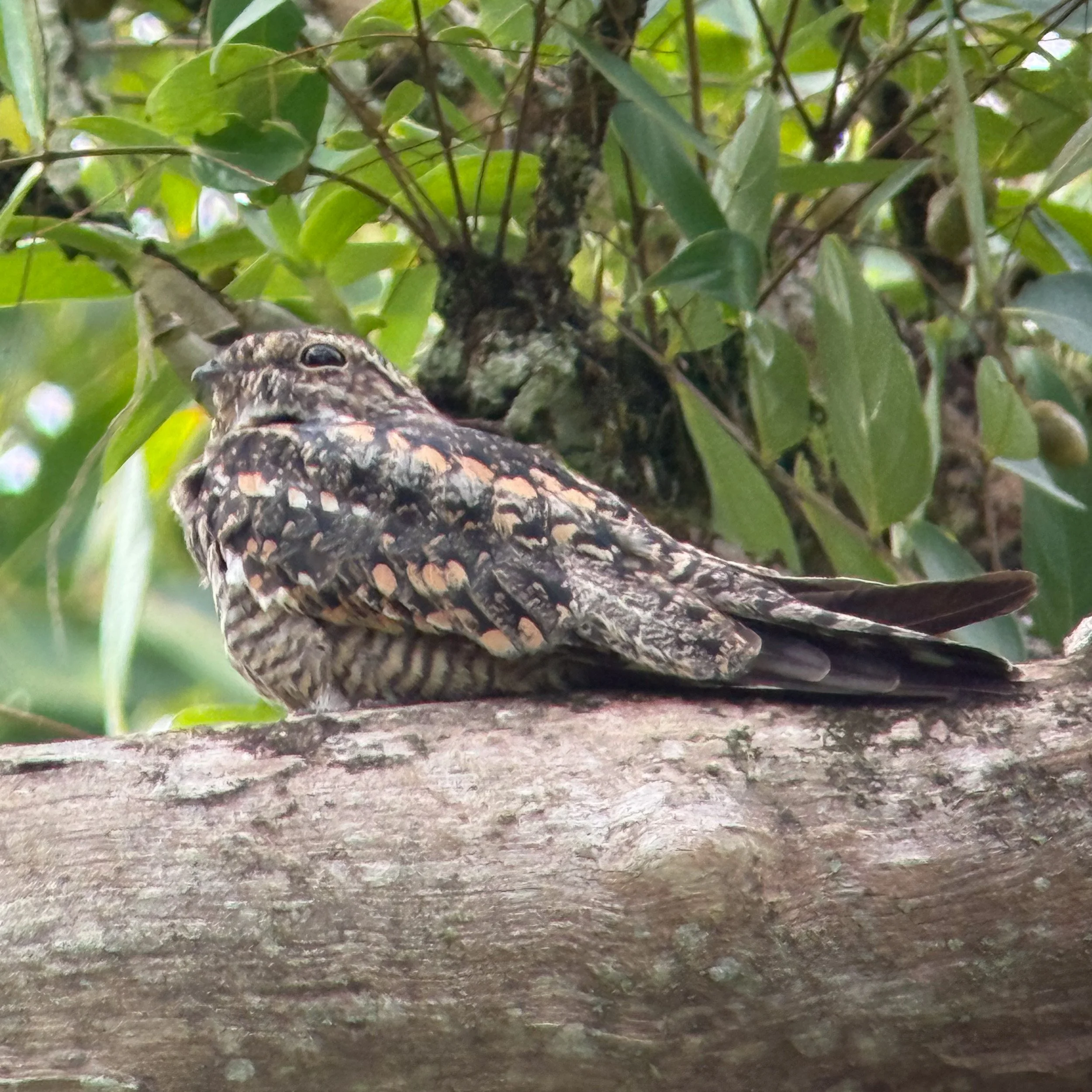
Photography on this trip presented some challenges. Whatever gear we wanted for Panama, we had to carry around the Galapagos, with multiple transfers by small plane, small boat, taxi and hand carrying. We didn't bring our longest lens, the 200-600mm. It would have been great to have that in Panama, but it would have been difficult to lug it around in the Galapagos, especially with the tight weight limits for the inter-island flights. We settled for bringing the Sony A7RIV with the 70-200 f/4 with 1.4x and 2.0x extenders. The 2x turned out not to be useful; in the dark forest, focusing was too slow and unreliable with that setup. Even with the 200mm and 1.4x (280 mm equivalent), I often had to focus manually, and it was hard to see well enough to do that. Most of my photos are above ISO 2000, with many up to ISO 12800; with the relatively short focal length, I had to crop most of the photos heavily. I used a lot of "Enhance" noise reduction in Lightroom. (I also brought the 20-70 f/4, which we hardly used; for wider-angle shots, we tended to use our phones.)
In Panama, we had expert naturalist guides, who carried spotting scopes. They were also expert at hand-holding the phones to the eyepieces of the scopes and getting pretty good pictures. We gradually learned how to do it, too. Looking back over our best photos from the trip, some were from the camera with 280mm, and some were from the phone and spotting scope. The scope gives a much more zoomed-in view, but somewhat reduced image quality. Each setup has its advantages.
June 22 — July 7, 2025 (Including 4 days in Panama City and a couple of extra days added on at Canopy Lodge)